Small Manufacturing Businesses
Manufacturing

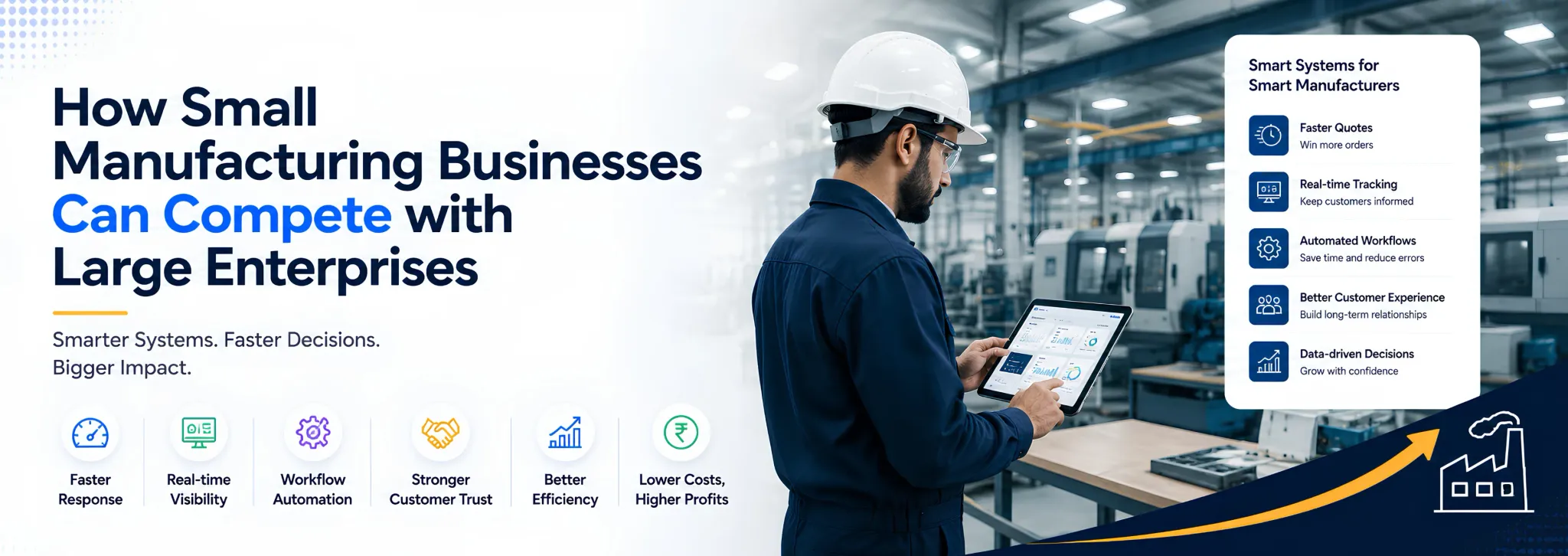
How Small Manufacturing Businesses Can Compete with Large Enterprises

Meena runs an 18-person furniture workshop in Jaipur. For years, she watched her biggest customer slowly shift orders to a large enterprise three states away. Not because that enterprise made better furniture. It replied to RFQs in hours instead of days, tracked every order in real time, and never lost a customer email in someone's inbox. Meena wasn't losing on quality. She was losing on speed and visibility. This is the quiet story behind most conversations about small manufacturing businesses today. The factory floor skills are often just as sharp as the big players'. What's missing is the hidden layer...
Agentic AI in Manufacturing
Manufacturing

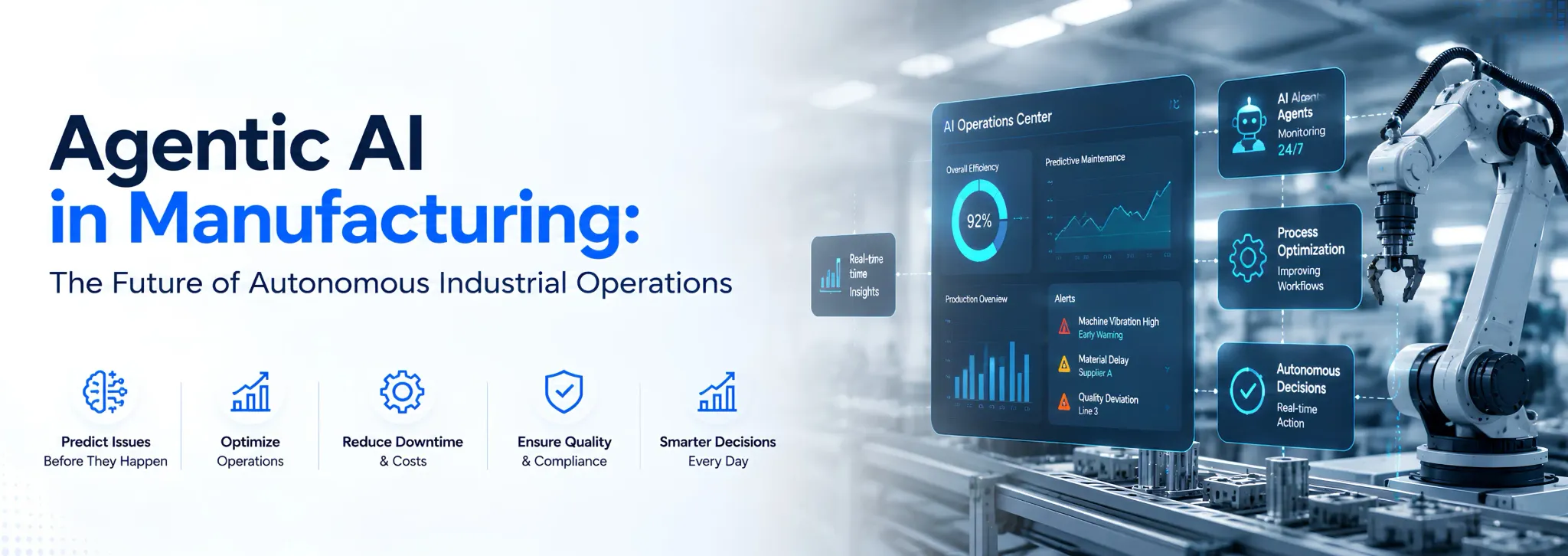
Agentic AI in Manufacturing: The Future of Autonomous Industrial Operations

At 2:15 AM, inside a modern manufacturing plant, everything appeared normal. Machines were running. Production lines were moving. Orders were being completed. Employees were monitoring operations. From the outside, it looked like another successful day in the factory. But hidden inside thousands of data points, something had changed. A machine vibration had increased slightly. A supplier shipment was delayed. Customer demand had shifted unexpectedly. A quality pattern on one production line was slowly changing. Each event seemed insignificant. But experienced manufacturing leaders understand one important truth: Small changes can create major consequences. A small machine issue can become hours of...

How AI Agents Are Performing Manufacturing
Manufacturing

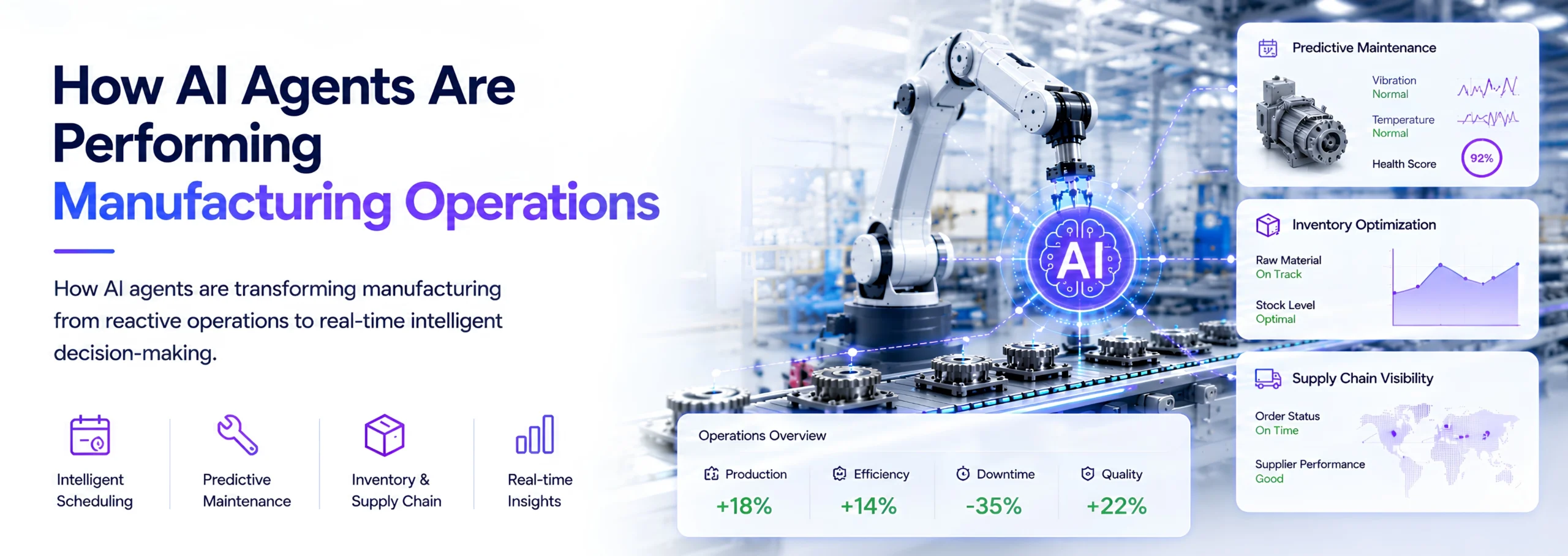
How AI Agents Are Performing Manufacturing Operations

In the past, the core philosophy behind performing manufacturing operations revolved around the concept of collecting information, analyzing reports, and making decisions accordingly. This formula worked as long as the production environment was predictable and products were simple. The scenario is no longer the same today. Modern manufacturing companies function in an environment characterized by uncertain demands, complicated global supply chain management, high-quality requirements, and the need to boost efficiency. Manufacturing companies produce a lot of operational data daily, but many of the decisions made tend to be reactive rather than proactive. It is precisely this disconnect between the existence...

Scope Of Manufacturing
Manufacturing

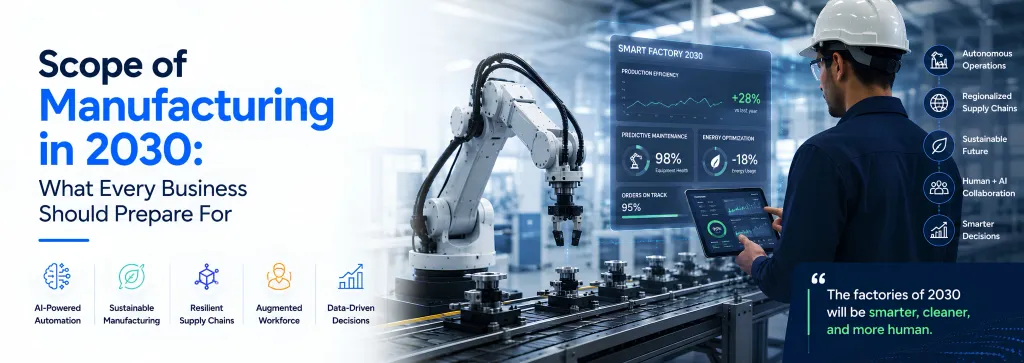
Scope Of Manufacturing in 2030: What Every Business Should Prepare For

Picture a plant manager checking her phone at 6 AM. Not for emails, for a message from her factory floor. A machine flagged its own bearing wear three days before it would have failed, ordered the replacement part, and blocked the maintenance slot on the calendar. She didn't ask for any of this. It just happened, and production never stopped. That's the scope of smart manufacturing in practice: systems that sense, decide, and act on their own. It's already happening in pockets across India and the world, and by 2030 it will be closer to normal than exception. The real...

Predictive Maintenance in Manufacturing
Manufacturing

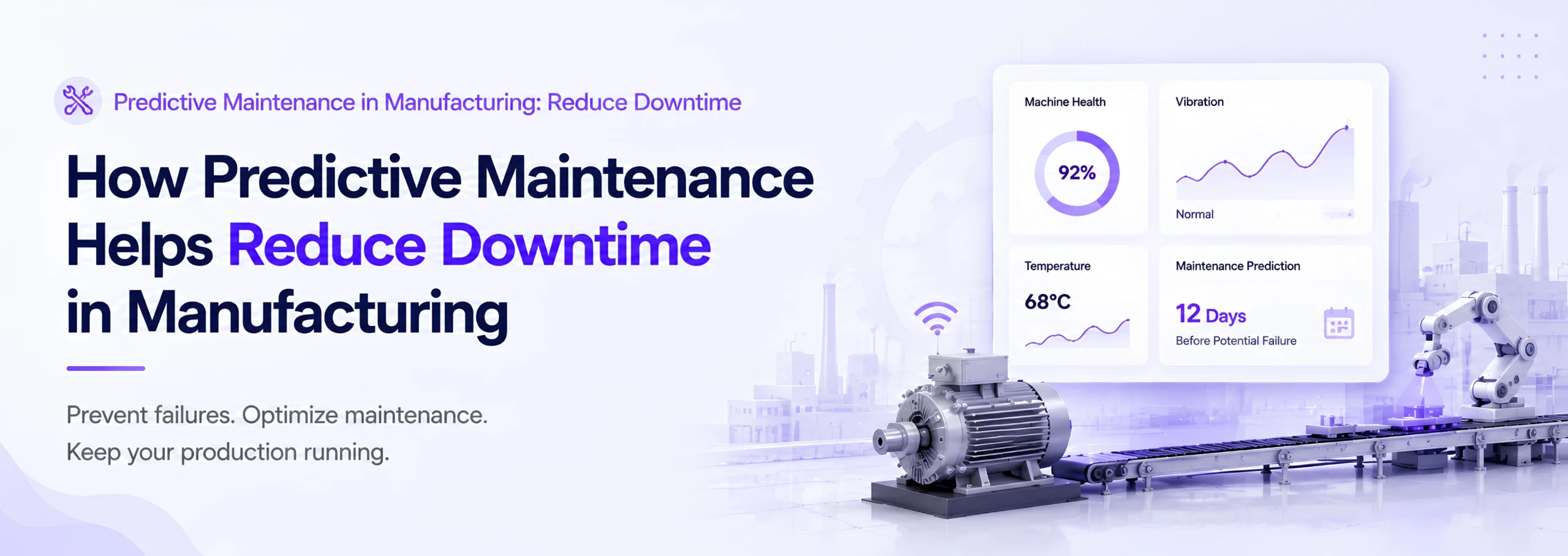
Predictive Maintenance in Manufacturing: Reduce Downtime

How Predictive Maintenance Helps Reduce Downtime in Manufacturing By the time the night shift supervisor understood what had happened, two hours of production were already lost. The emergency mechanic charged double. The spare part wasn't available, forcing a three-hour drive at dawn. A customer order slipped from Thursday to Monday, and the machine stayed offline for 36 hours. The irony? The warning signs were there all along. Vibration readings had been rising for weeks. The machine was sending signals. Nobody noticed. This happens on factory floors every day. The question isn't if equipment will fail. It will. The question is...

AI Is Transforming Manufacturing
Manufacturing

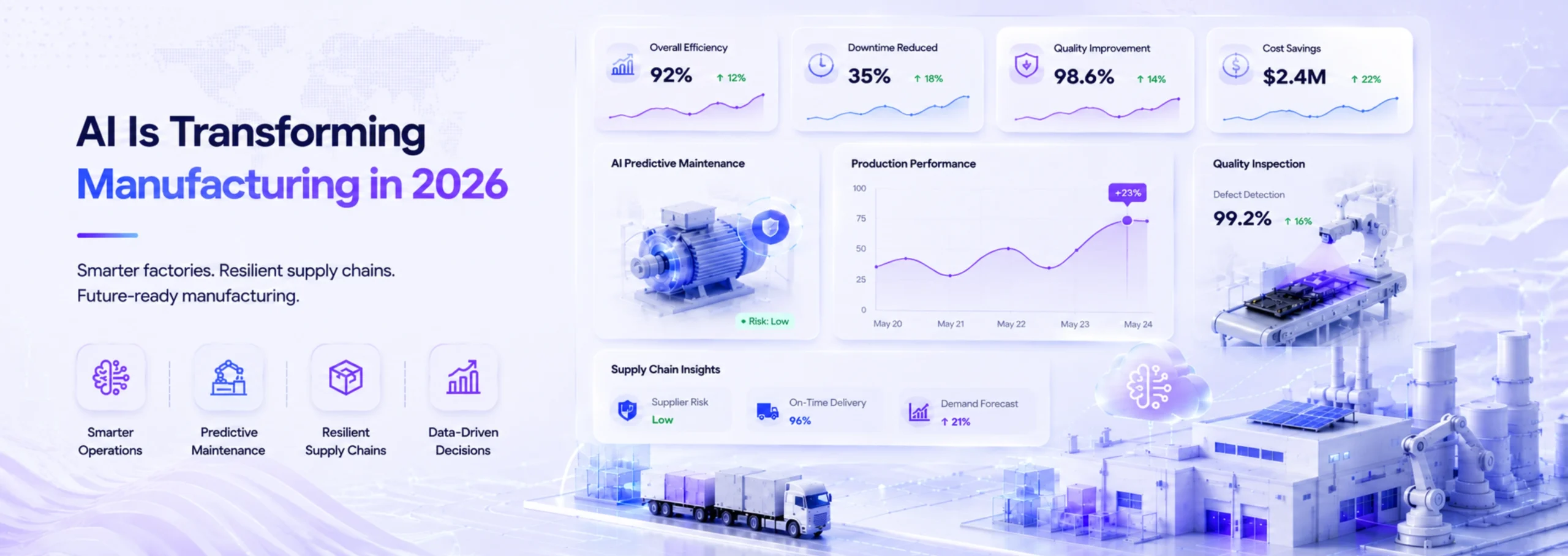
AI Is Transforming Manufacturing: The 2026 Shift

The Intelligence Layer: How AI Is Transforming Manufacturing in 2026 Walk through any factory today, and you can feel it. Not just the movement of machines or the rhythm of production lines, but a different kind of energy. A quiet urgency. A sense that something fundamental has shifted. Three years ago, conversations around how AI is transforming manufacturing usually began with “we’re exploring it.” There were pilot projects, strategy decks, and leadership meetings full of possibility. Everyone knew AI would matter someday. In 2026, someday has arrived. Today, 97% of manufacturing and supply chain leaders say AI is already integrated into their...

Manufacturing

How AI Improves Inventory Management in Manufacturing

AI improves demand forecasting, helping manufacturers reduce stockouts and excess inventory. Automation minimizes manual errors through dynamic reordering, real-time tracking, and warehouse visibility. AI strengthens supply chains by predicting lead times, monitoring vendors, and reducing inventory risk. Successful AI adoption depends on clean inventory data and proper workforce training. Manufacturers always walk on a tightrope of costs due to either overstocking or understocking of inventory. Even though the use of spreadsheets in managing inventory enables one to keep track of their previous record of inventories, it does not cater for the changing market situation, interruptions of suppliers, or changing demand....

ROI for AI in Manufacturing
Manufacturing

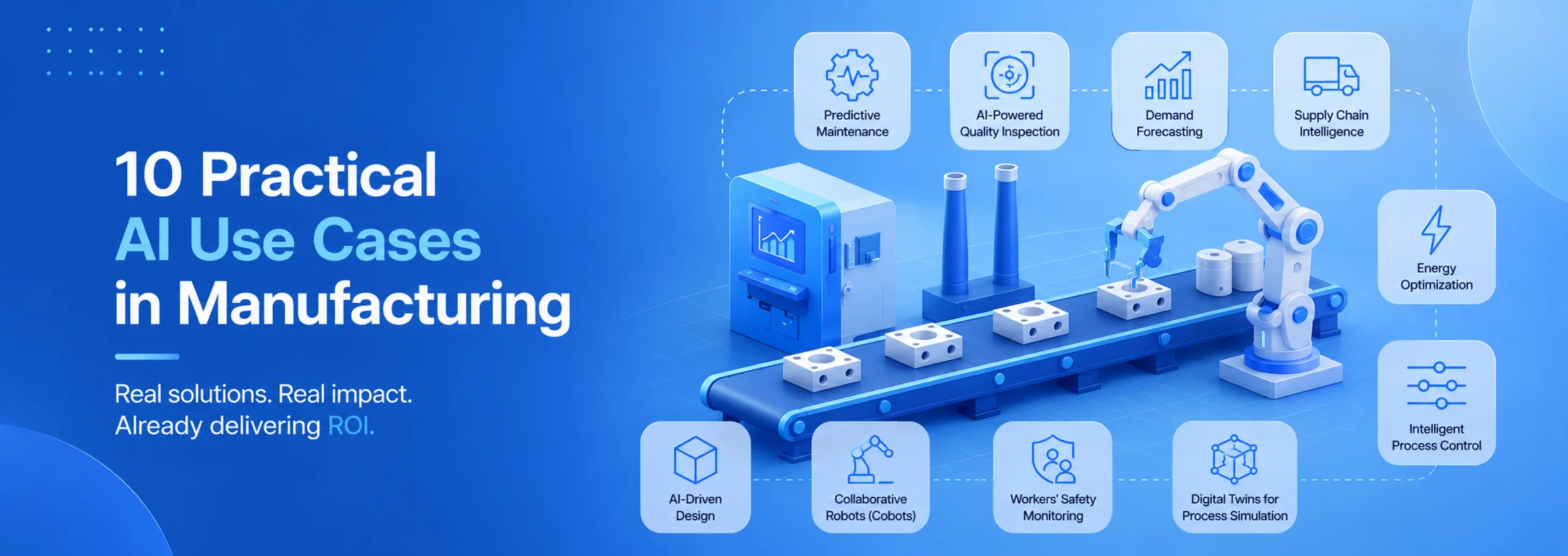
10 Proven Wins Delivering ROI for AI in Manufacturing

10 Practical AI Use Cases in Manufacturing Already Delivering ROI There is a factory floor somewhere in the world right now where a machine has not experienced any downtime in eight months because an AI in manufacturing picked up on a bearing issue six weeks before it was set to break down. There were no panic measures taken. Rather, a maintenance schedule was implemented, and a two-hour repair later, business continued as usual. No longer a theoretical concept. This is already taking place in manufacturing facilities worldwide. The current implementation of artificial intelligence in manufacturing provides tangible benefits through pragmatic, quantifiable, and...

ERP for Manufacturing
Manufacturing

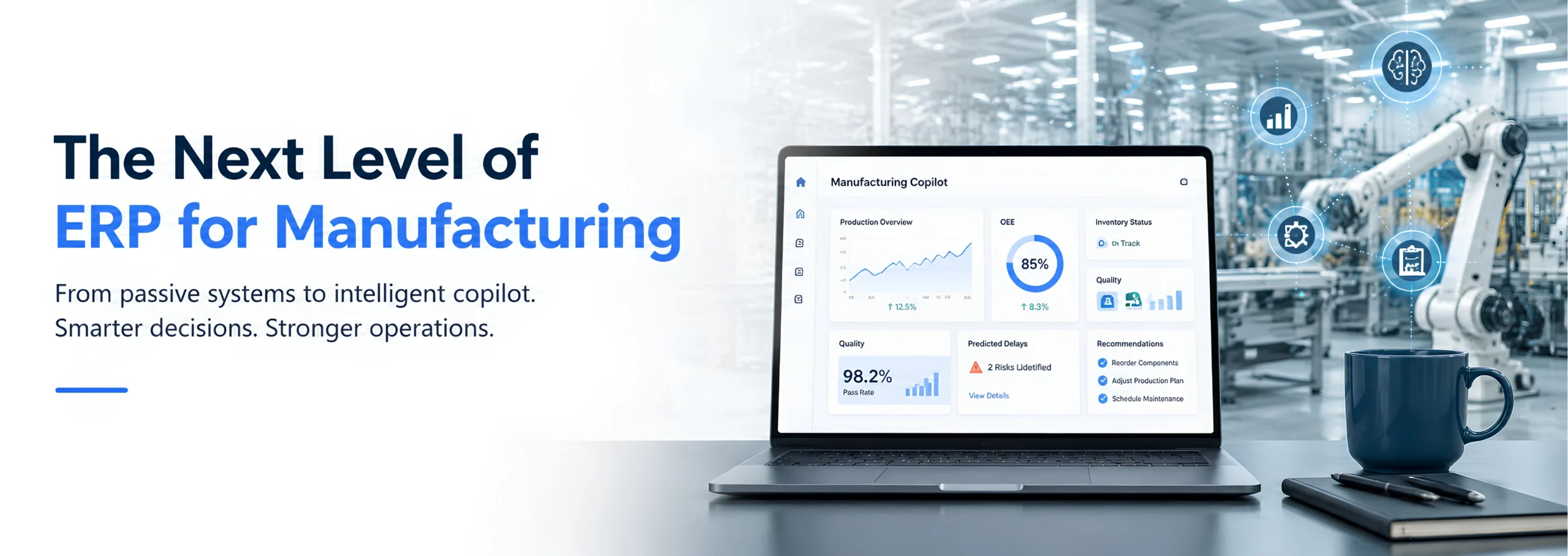
The Next Level of ERP for Manufacturing

Key Takeaways: Manufacturing ERP is evolving from a passive record-keeping system into an AI-powered copilot that can interpret data, recommend actions, and eventually automate decisions. For Indian manufacturing SMEs, the biggest challenge isn't adopting AI; it's first digitizing fragmented, paper-based processes and disconnected workflows. Low-code/no-code platforms are making ERP accessible by enabling manufacturers to build affordable, flexible systems without heavy IT investments or lengthy implementations. Dhumi helps SMEs create the connected operational foundation needed today, so they are ready to leverage AI copilots and agentic automation tomorrow. For many years, ERP for manufacturing has been synonymous with a virtual filing cabinet. The...

5 Manufacturing Process
Manufacturing

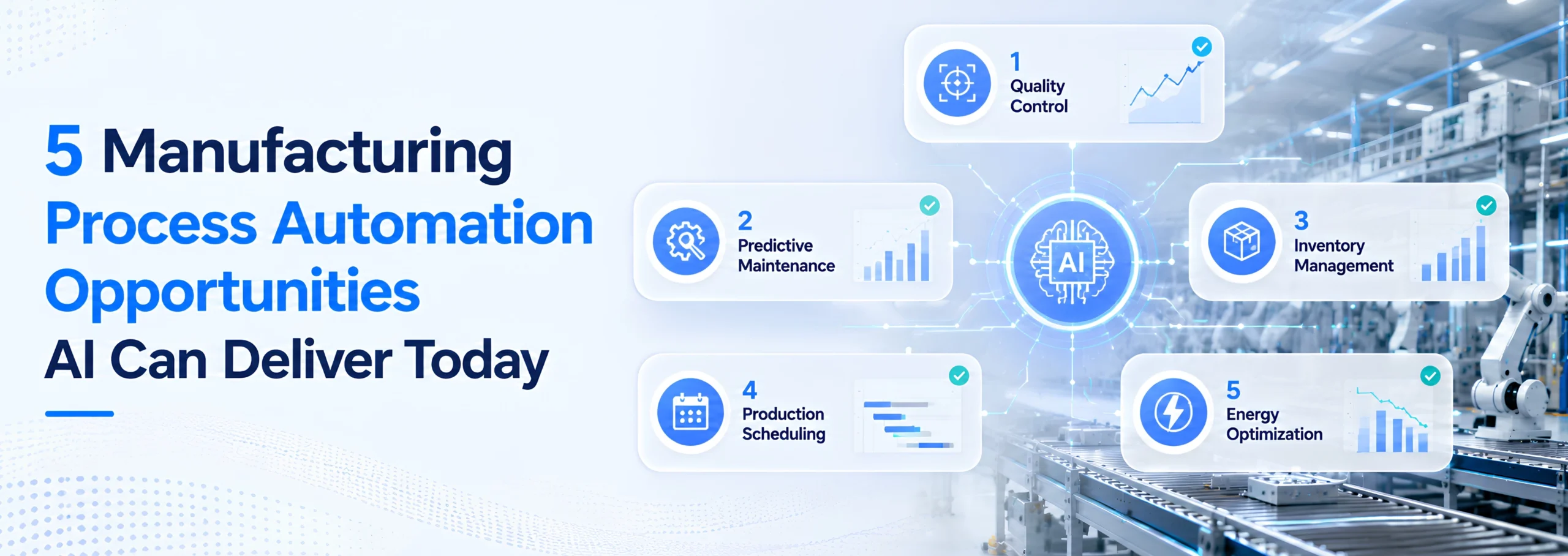
5 Manufacturing Process Automation Opportunities AI Can Deliver Today

Key Takeaways: AI-powered quality control detects defects before they impact customers. Predictive maintenance reduces downtime by identifying failures before they occur. Smart inventory management aligns stock levels with real-time demand. Intelligent production and energy optimization improve efficiency while lowering costs. For decades, companies have invested billions in manufacturing process automation to make production more efficient, faster, and cost-effective. They introduced conveyor belts to move products seamlessly across the factory floor. They deployed robotics to accelerate production lines and improve precision. They implemented manufacturing software solutions like ERP systems to digitize operations and streamline workflows. Yet, despite these advancements in Manufacturing Process Automation,...