Hero background

Best Custom Web Portal Development
That Fits How Your Business Actually Works

If your clients, vendors, or dealers are still chasing updates over WhatsApp and email, that's usually the first sign your business is ready for custom web portal development. 67% of B2B buyers prefer a self-service experience without reps. A custom web portal can bridge this gap, giving your team room to focus on real work instead of status updates.

Supported by

NVIDIA sponsorship
sponsorship1
Deflinks client logo
skylimits logo client
riysash client logo
vgc logo client
shah Brothers
Elthium Health client logo
Easy Abroad  client Logo
Chemismith Lab client logo
Arasu Gold company Client logo

Why Your Business Needs More Than A Shared Spreadsheet Or A WhatsApp Group

Most B2B buyers, about 83%, now prefer using self-service tools. They want to place orders, check status, and manage their accounts on their own, without calling or messaging someone for every update. 

If your clients, vendors, or dealers keep asking, “Where’s my order?” or “What’s my balance?”, you’re wasting staff time on questions a well-built portal could handle automatically.

What Dhumi's Custom Web Portal Development Includes?

What Dhumi's Custom Web Portal Development Includes- Dhumi

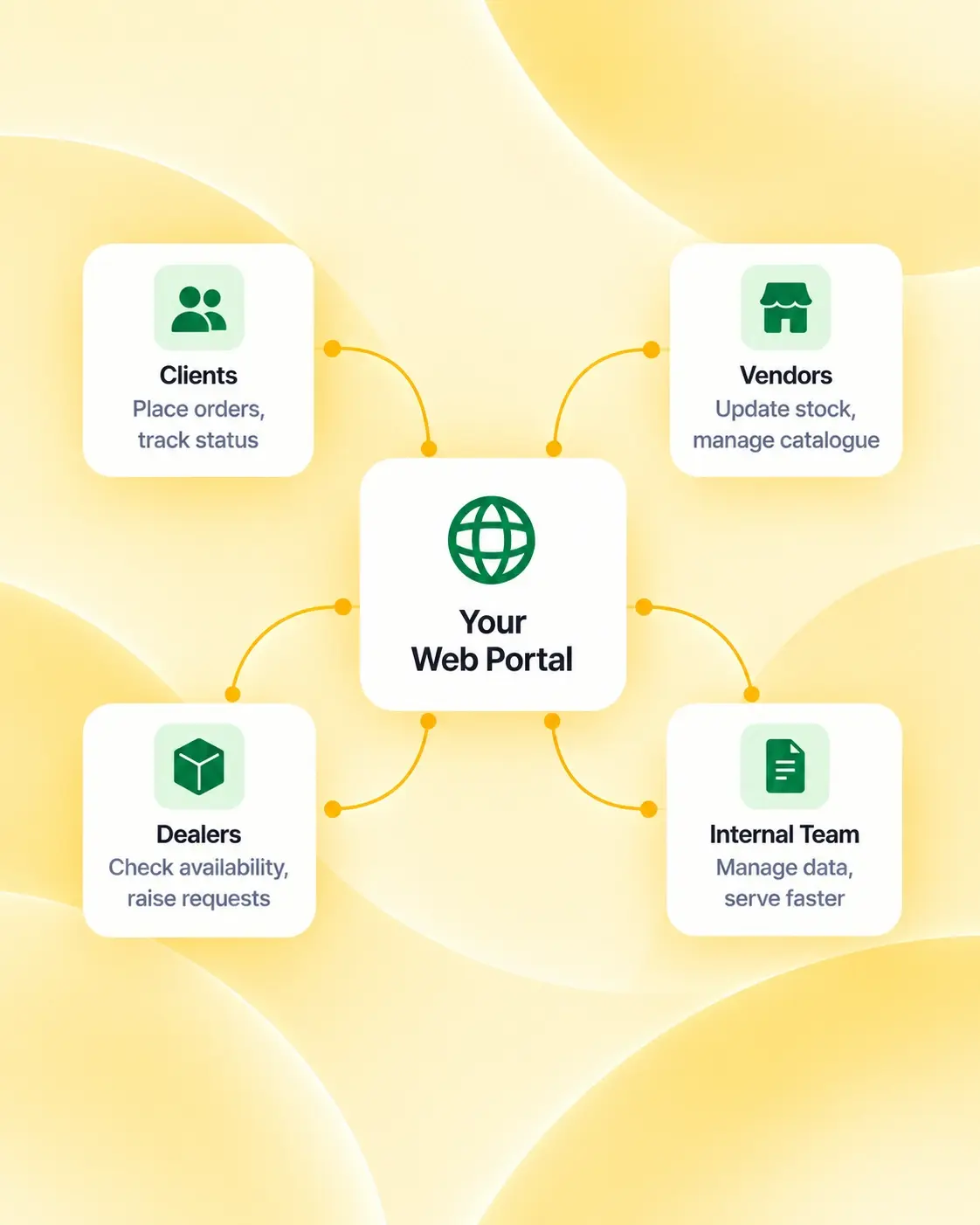
Dhumi offers custom web portal development services built around a secure, branded portal made just for your users, clients, vendors, dealers, or internal teams. It’s not a generic dashboard bolted onto your website. 


Digital channels now account for 56% of all B2B revenue, so a client portal isn’t a nice-to-have anymore; it’s where your relationships with clients and partners actually live.

Client Login and Self-Service Dashboard

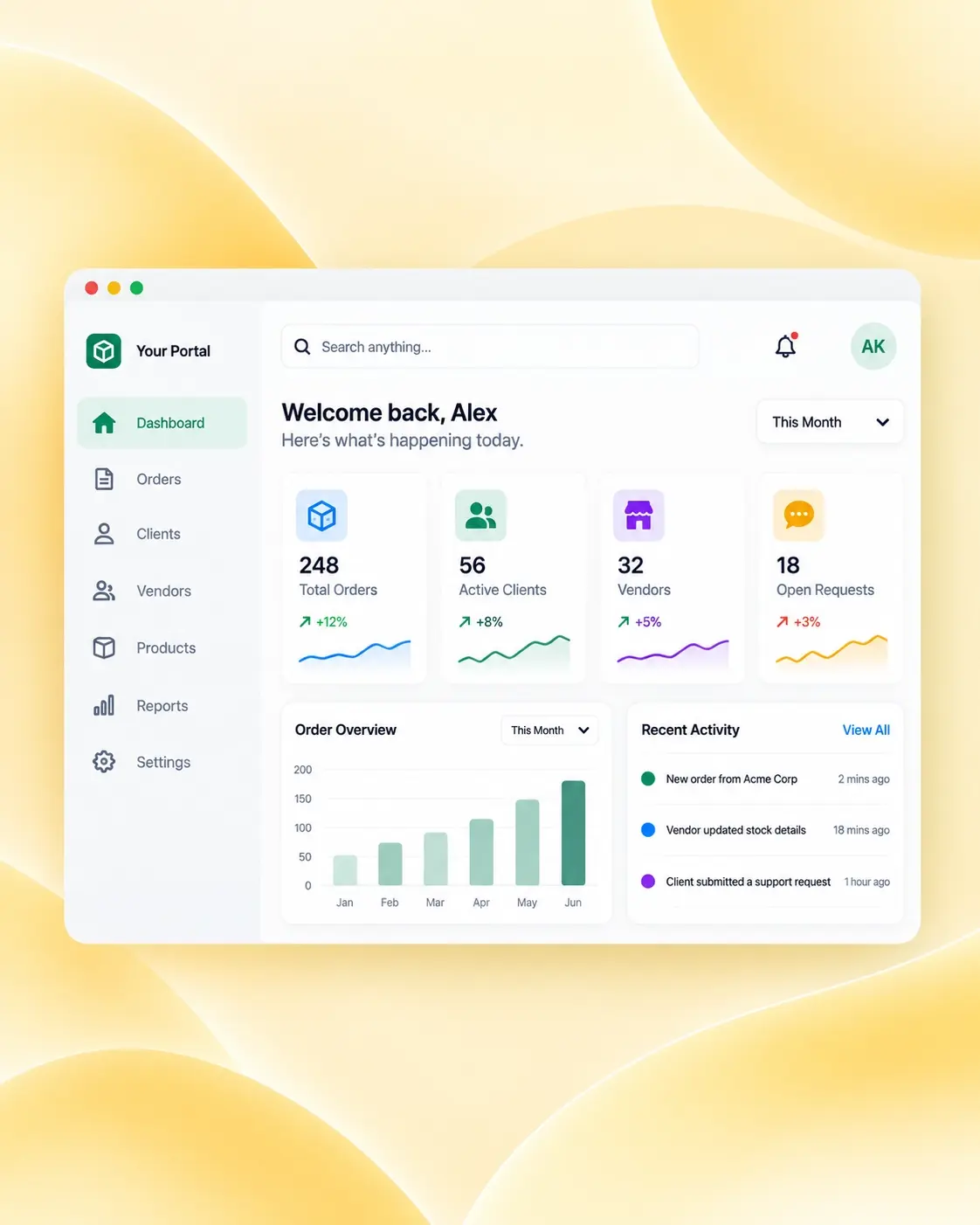
Access order history, invoices, documents, and support requests all in one place.

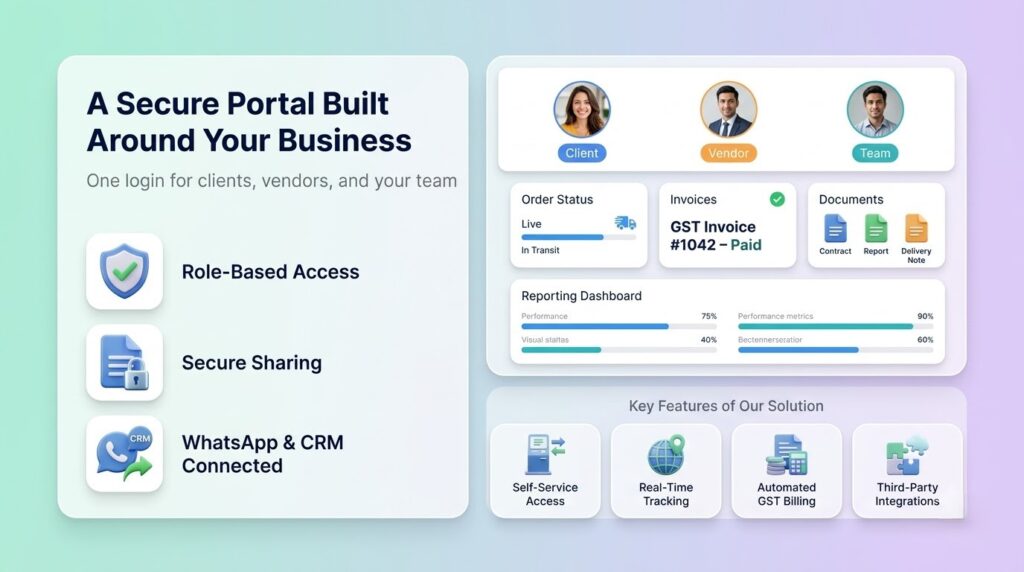
Role-Based Access Control (RBAC)

Clients, vendors, and internal staff each see only what's relevant to them.

Real-Time Order and Status Tracking

No more "can you check and get back to me.

Automated Invoicing and GST-Compliant Billing

Invoices generate and update without manual entry.

Third-Party Integrations

Connects to your existing CRM, ERP, accounting tools, or WhatsApp Business API.

Secure Document Sharing

Contracts, reports, and files exchanged without email attachments.

Custom Reporting Dashboards

Clients and internal teams both see live numbers, not last week's export.

How Does Dhumi Deliver Custom Web Portal Development Services?

Dhumi maps your real workflow first: who logs in, what they need to see, and what currently happens over email or WhatsApp, before a single screen gets designed. That mapping is what separates a portal that gets adopted from one that quietly gets ignored after launch.

What You Get Why It Matters
2–3 weeks to a working MVP Sourced from Dhumi's own delivery model, so your team is using a real portal fast, not waiting on a big-bang launch.
Lower cost per resolved request Self-service resolution can cost a fraction of an agent-handled request. Some benchmarks put it as low as $1.84 per self-served contact versus $13.50 for one handled by a person (Fullview, 2025), so what you save in support time alone can offset a meaningful share of the portal's monthly cost.
3 clearly scoped delivery tiers Not a single one-size-fits-all package, you pick the tier that matches your workflow's complexity.

How Does Dhumi's Custom Web Portal Development Process Work?


Week 1

Map your workflow

Dhumi's team identifies who needs portal access and what their tasks are: clients, vendors, and internal staff, based on the current process, not a generic template.


Week 2

Design and Data Migration

Portal design focuses on real user roles. We clean and migrate existing spreadsheets and legacy records; rushing this step is why so many client portals see slow adoption.

Week 2-3

Build and integration

The portal is set up and linked to your CRM, accounting, or inventory tools, so you never enter information twice.

Week 3

Working MVP is live

Your team and your first portal users are logging in and using it, not viewing a mockup.

Ongoing

Monthly Audit & Updates

Dhumi builds the portal every month based on real use, adding new modules, increasing automation, and deepening integrations.

New team members with self-service portal access ramp up about 50% faster and create around 40% fewer escalations than teams without access. The self-service approach that helps external clients benefits your internal onboarding too.

What Makes Dhumi's Approach to B2B Customer Portal Different

Dhumi understands your workflow, identifies bottlenecks, and builds a solution around your business to make everyday work simpler and more connected.

gradient-border

Built Around Your Workflow

The portal shows how your business operates, not how a typical SaaS product thinks it should.

case icon
gradient-border

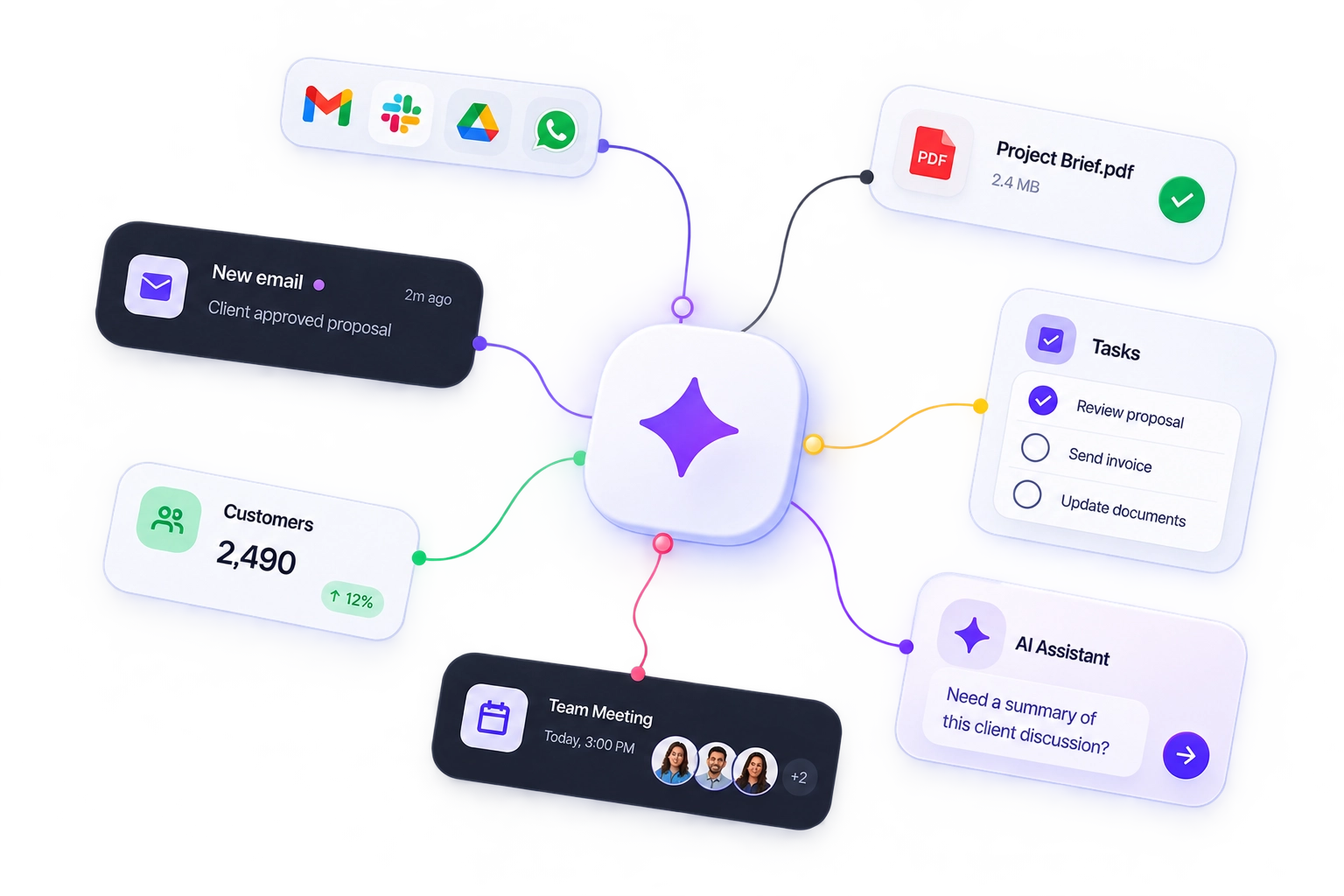
AI Built Into The Operational Layer, Not Sold Separately

Task routing, document handling, and status automation all exist within the portal.
case icon
gradient-border

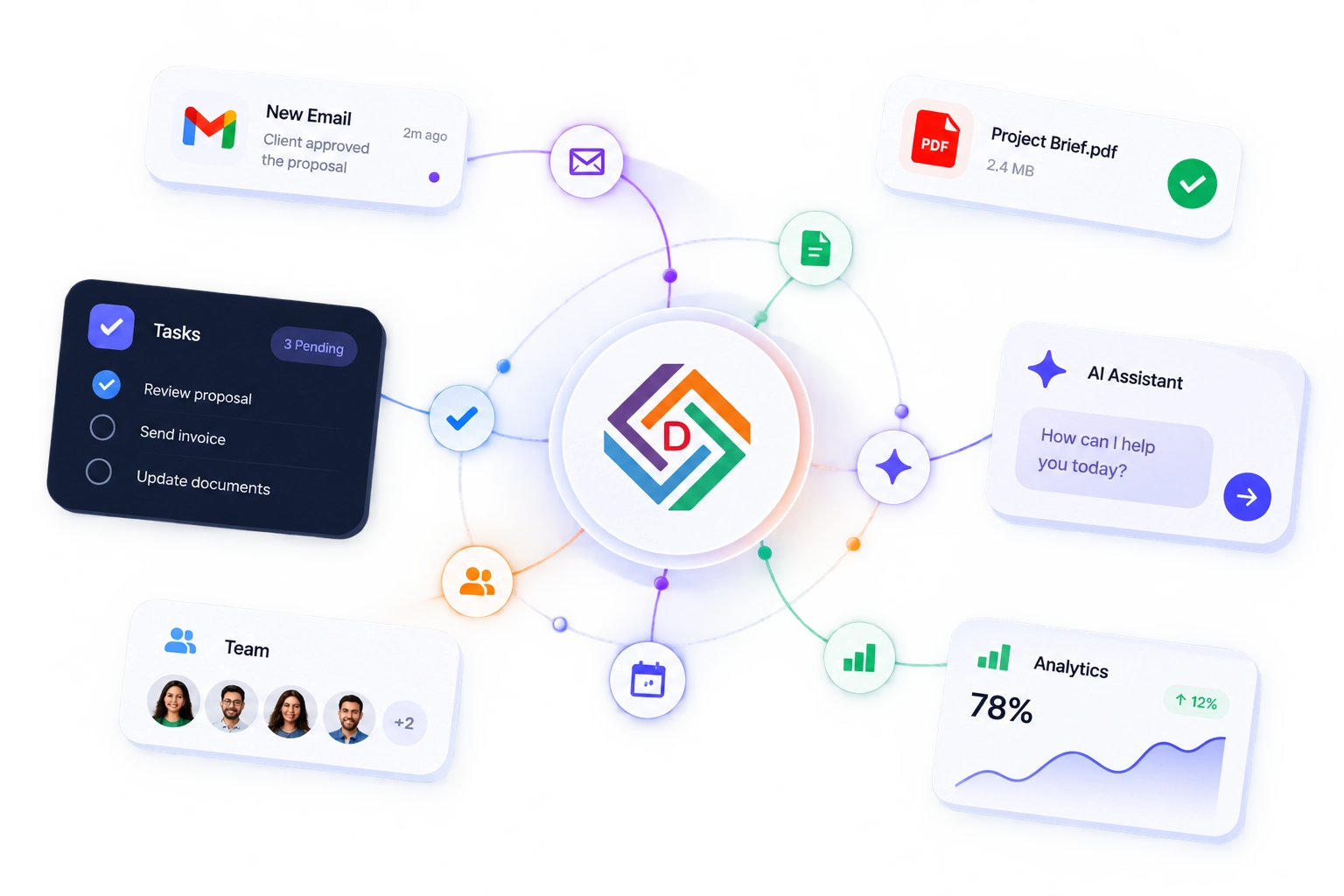
One Platform. Everything Connected.

It connects with your CRM, invoicing, and inventory tools instead of sitting apart from them.
case icon
gradient-border

A Partnership That Grows With You

An ongoing monthly partnership, not a one-off project where the vendor disappears after launch

case icon

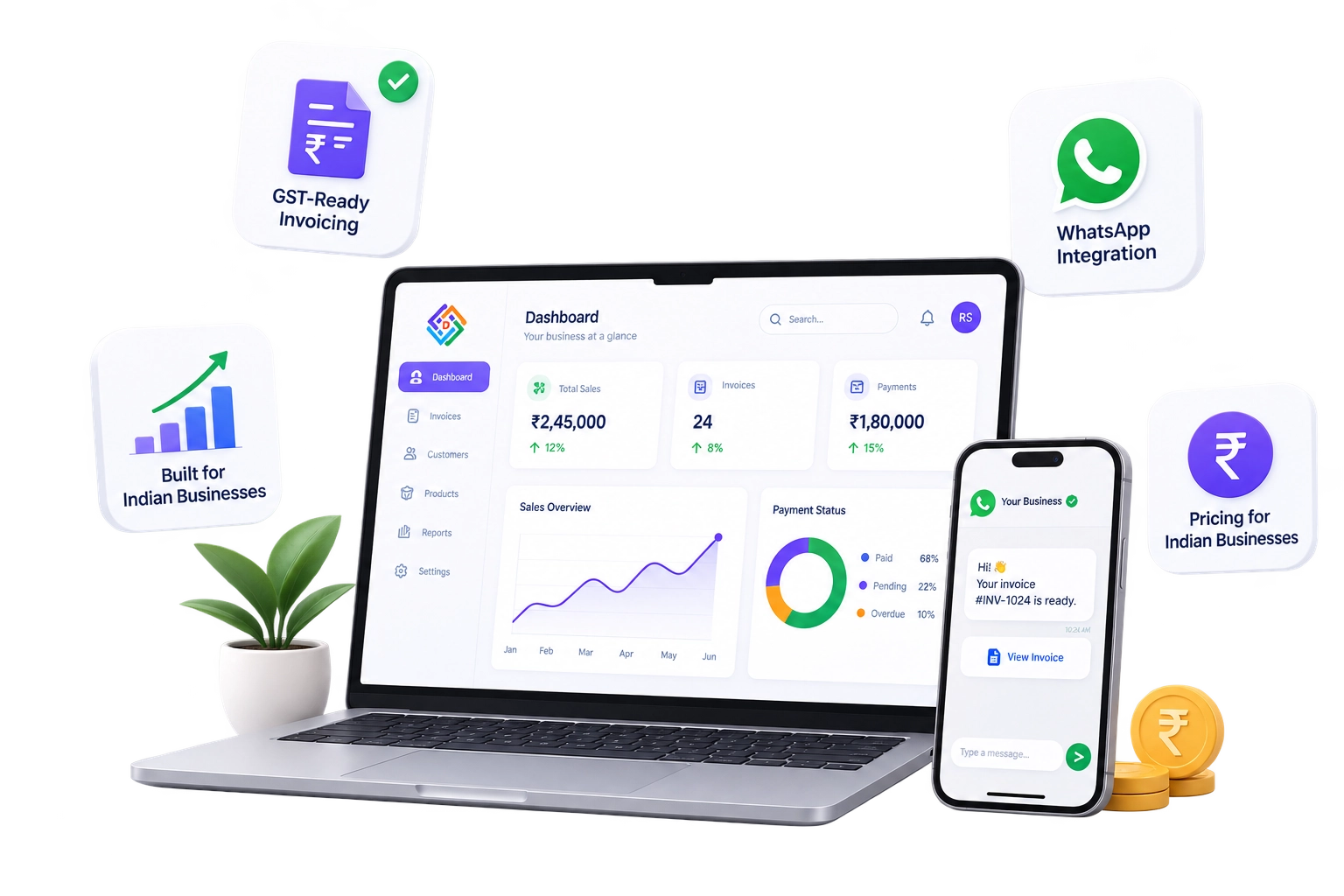
Software Made for Indian Businesses

Made for India from the start, with GST-ready invoicing, WhatsApp integration, and pricing tailored for Indian B2B businesses, not U.S. enterprises
case icon

What Does Custom Web Portal Development Cost?

The cost of custom web portal development fits differently depending on who’s using it and how complex the workflow is, so here’s how it maps across Dhumi’s tiers.

Tier Best for a portal that...
Business Systems (SMB) Serves clients or a small partner network with orders, invoices, and documents
Manufacturing Systems Connects vendors, dealers, and production status across a manufacturing workflow
AI Platform 360 Needs AI agents, WhatsApp automation, or advanced connected workflows across teams

Not sure which tier fits your operation? Every tier of Dhumi’s custom web portal development starts with the same workflow mapping, so you never overpay for features you won’t use. Let’s talk it through.

Empower Your Clients with Seamless On-Demand Portal Access

67% of B2B buyers prefer to handle things themselves instead of waiting for a reply, and custom web portal development is how you meet them there while still showcasing what makes your business different. 

Talk to Dhumi about your portal, and see a working MVP in 2–3 weeks, not months.

Frequently Asked Questions
Custom Web Portal Development

Explore our most frequently asked questions to get started.

A website is mostly static content that visitors can only read. A portal, on the other hand, requires a login and gives users a tailored view of their own data, orders, invoices, documents, and account status. That tailored, role-based experience is the whole point of custom web portal development.

Dhumi's portals are priced starting at the Business Systems tier. The cost increases with the number of user roles, integrations, and automations. Check the pricing breakdown above for details.

Dhumi delivers a working MVP in 2 to 3 weeks, then adds features monthly based on real usage, not one big launch.

A template works if all your users need the same generic view. Most B2B relationships aren't like that. The average purchase now includes 13 internal stakeholders, each with unique needs, which is exactly where a custom-built portal with role-based access pays for itself.

At a minimum, you need:

• Role-based login
• Order or project status tracking
• Invoicing
• Document sharing
• At least one integration with your CRM or accounting system

Check the full feature list above.

Because a template forces your team to work around someone else's assumptions, and an in-house build eats months of engineering time you probably don't have spare. Dhumi's web portal development services are built around your actual workflow, delivered as a working MVP in weeks, then improved monthly as real usage tells you what to build next.

Dhumi uses a monthly, effort-based model instead of a fixed contract. Scope changes get added to next month's work, so you skip change-order talks. The relationship adjusts to your needs, not just the initial plan.

No setup fee. The starting monthly price includes the initial build. Costs only go up with added scope, modules, or integrations. These costs are clear from the start, not added later.

Yes. Third-party integrations with CRM, accounting, inventory, and WhatsApp Business API come standard, not as a separate paid add-on.

Still Have Questions?

Support details to capture customers that might be on the fence.