Map the real workflow
Dhumi meets with the team to track how leads, jobs, and invoices move today. This includes WhatsApp threads, spreadsheets, and everything else before any design work begins
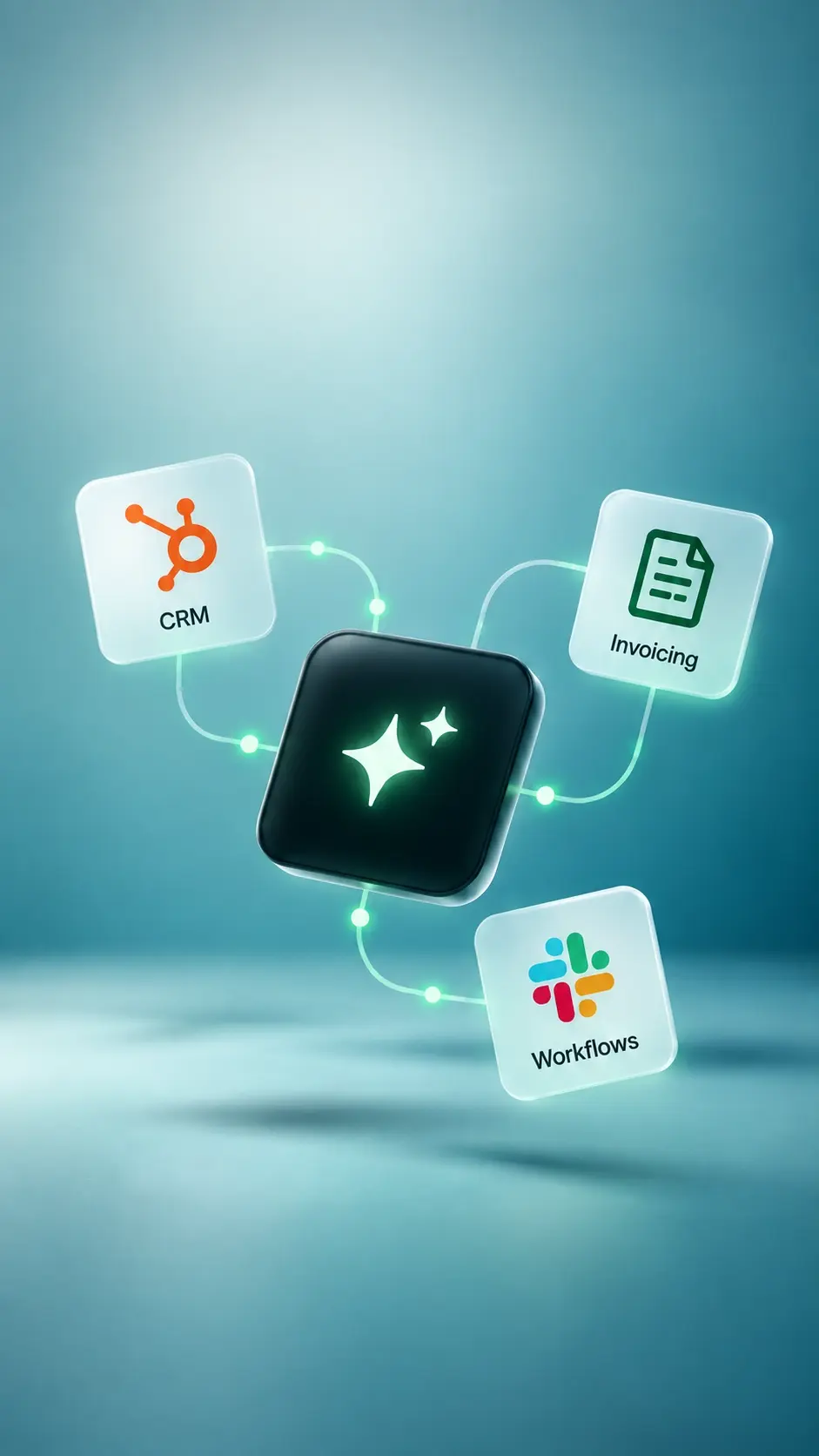
An AI assistant for business only earns its keep when it lives where your work already happens, not in a browser tab your team forgets to open. Dhumi wires it straight into your CRM, invoicing, and daily workflow instead. Working MVP in 2 to 3 weeks. Talk to us for pricing scoped to your business.
Supported By
You’ve probably already tried an AI assistant for business before. A chatbot plugin, a trial subscription, an app someone on the team downloaded after a LinkedIn post. It worked for a week. Then it quietly stopped getting opened.
That’s not a problem. It’s the default outcome for most artificial intelligence in business today. 91% of businesses use AI in some way. In India, the trend is stronger: 59% of Indian SMBs have added AI solutions to their daily operations. Adoption is everywhere. Actual daily use is rarer because most tools are built to sit beside your business instead of inside it.
Here’s what that looks like on the ground every single week:
An AI assistant for business is not supposed to work that way. Here’s the part that should concern you more than the tool: 83% of growing SMBs use AI, while only 55% of declining ones do. The businesses pulling ahead aren’t the ones with the flashiest AI subscription. They’re the ones where AI is wired into a system the team was already using, not competing with it for attention.
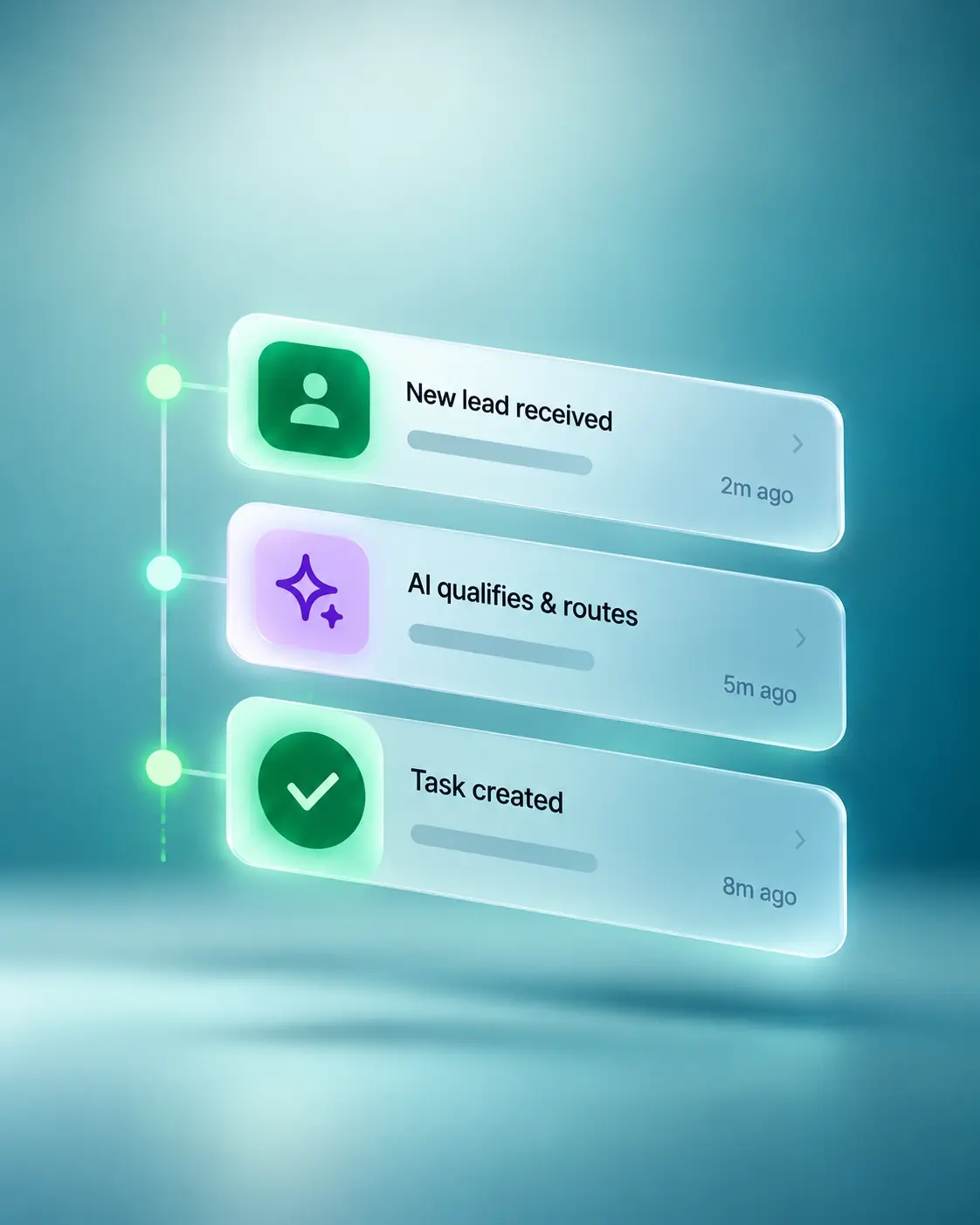
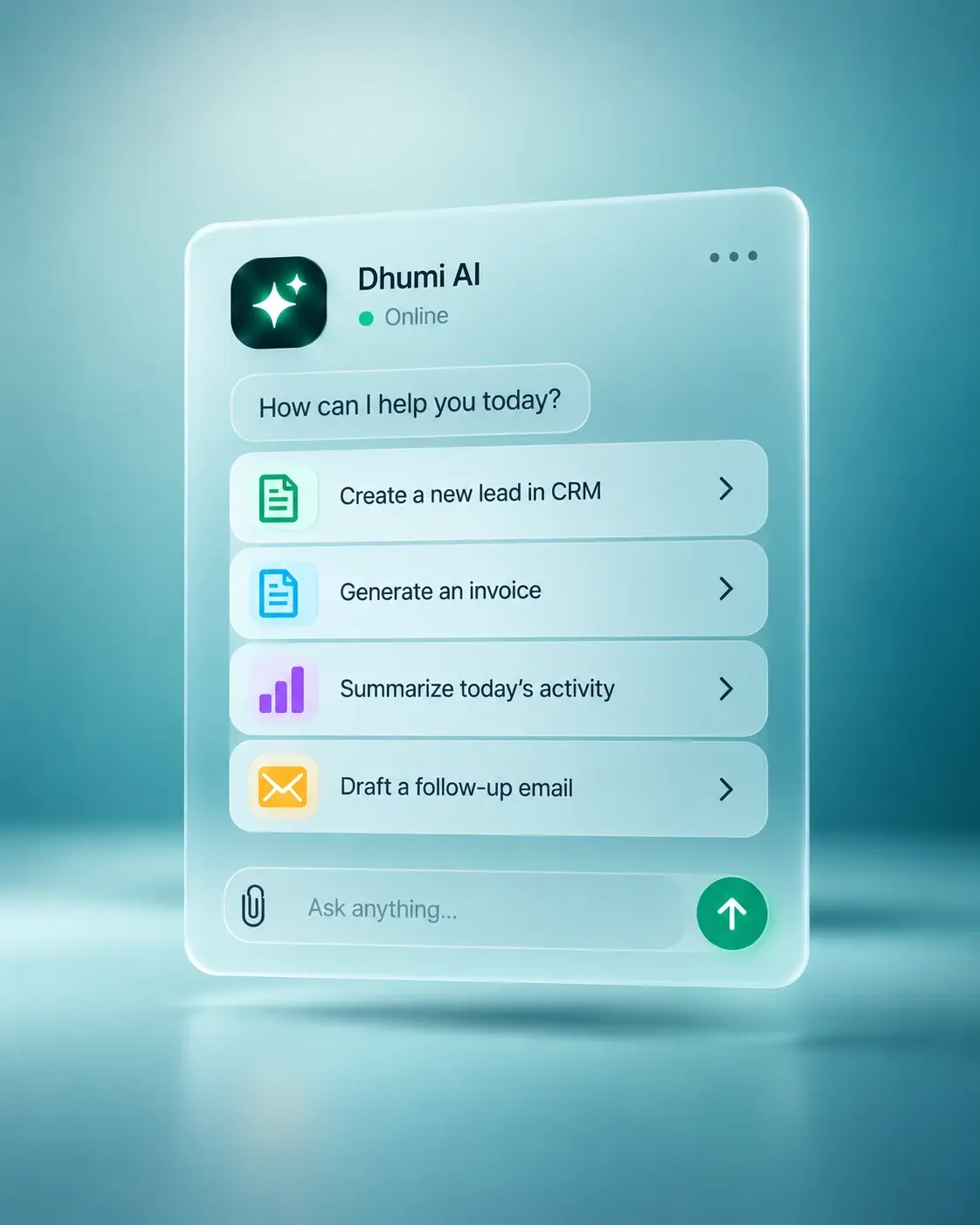
An AI assistant for business shouldn’t be one more app your team half-remembers to check. 74% of SMBs already get their AI value this way. Through features embedded in the software they use daily rather than standalone AI platforms, and that’s exactly what Dhumi builds: workflow automation, lead routing, document handling, and decision prompts, wired straight into your CRM, dashboards, and invoicing.
Here’s what an AI assistant for business actually gets built into the system:
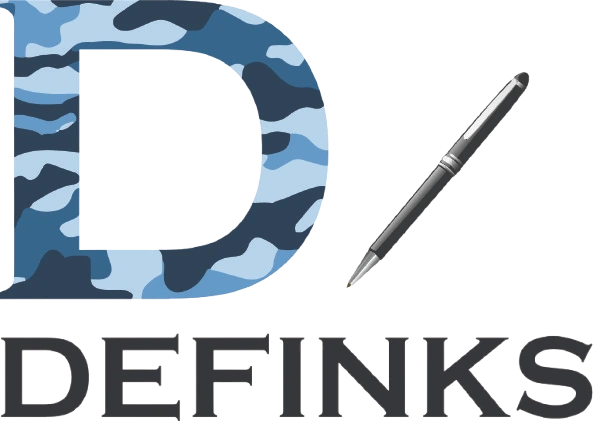
Enquiries from WhatsApp, your website, or call logs go straight into your pipeline. They get tagged and assigned right away. This way, they don't just sit in someone's inbox
The system identifies stalled deals and drafts the next message automatically. This way, no one has to remember to check
Quotes transform into invoices without manual entry, eliminating the need for human input. The system also flags mismatches before they lead to disputes
Not a static report that someone pulls together every Friday
Sales, ops, and dispatch see the same live record instead of three different spreadsheets
The system surfaces what's actually slowing a deal or job down, instead of you having to go looking for it
The honest answer to “how does an AI assistant get built into your business?” starts even before coding. It begins with mapping how work flows through your business today. Most AI tools for business get sold the other way around: software first, your process forced to fit around it afterwards. Dhumi first maps the real workflow. This shows how a lead becomes a job and how a job turns into an invoice. Then, it builds the AI-assisted system around this shape.
A couple of numbers make the case better than we can:
Here’s what’s actually true about how Dhumi builds, with no invented results attached to it:
Most software vendors sell a license and disappear once the invoice clears. Dhumi’s model runs the opposite way: the monthly subscription only continues if the system is still earning its place in how the business runs. The difference is clear: some AI assistants are ignored after the first week, while others are used daily.
At a glance
| Aspect | AI Assistant | Virtual Assistant |
|---|---|---|
| Availability | Runs continuously, with no downtime | Available outside typical hours or schedules |
| Best at | High-volume tasks like routing, drafting, and flagging | Not ideal for judgment calls, exceptions, or coordination |
| Where it lives | Embedded within the business system | Works alongside the system |
| Follow-through | Prompts the next step but doesn't own the outcome | Owns the task from start to finish |
| Dhumi's approach | AI handles repetitive tasks within the workflow | Not offered as a separate staffing service |
Small businesses that adopt AI this way report saving 20 to 30 hours a month once the system is actually in daily use, rather than sitting untouched in a tab nobody opens. Here’s how that happens in practice:
Dhumi meets with the team to track how leads, jobs, and invoices move today. This includes WhatsApp threads, spreadsheets, and everything else before any design work begins

Using the workflow map, Dhumi identifies where AI can help, like in lead routing, follow-ups, document handling, and dashboard summaries. He also notes where AI should stay out
A functional version goes live for the team, not just a slide deck
The system adapts with the business, adding new modules, automations, and AI touchpoints based on team usage
Here's what actually sets Dhumi's AI assistant for business apart from a tool bought off a SaaS shelf:
The system shows how leads, jobs, and invoices flow in your business. It's not a one-size-fits-all dashboard

It shows up inside the CRM, the invoicing, the dashboard, where the work already happens
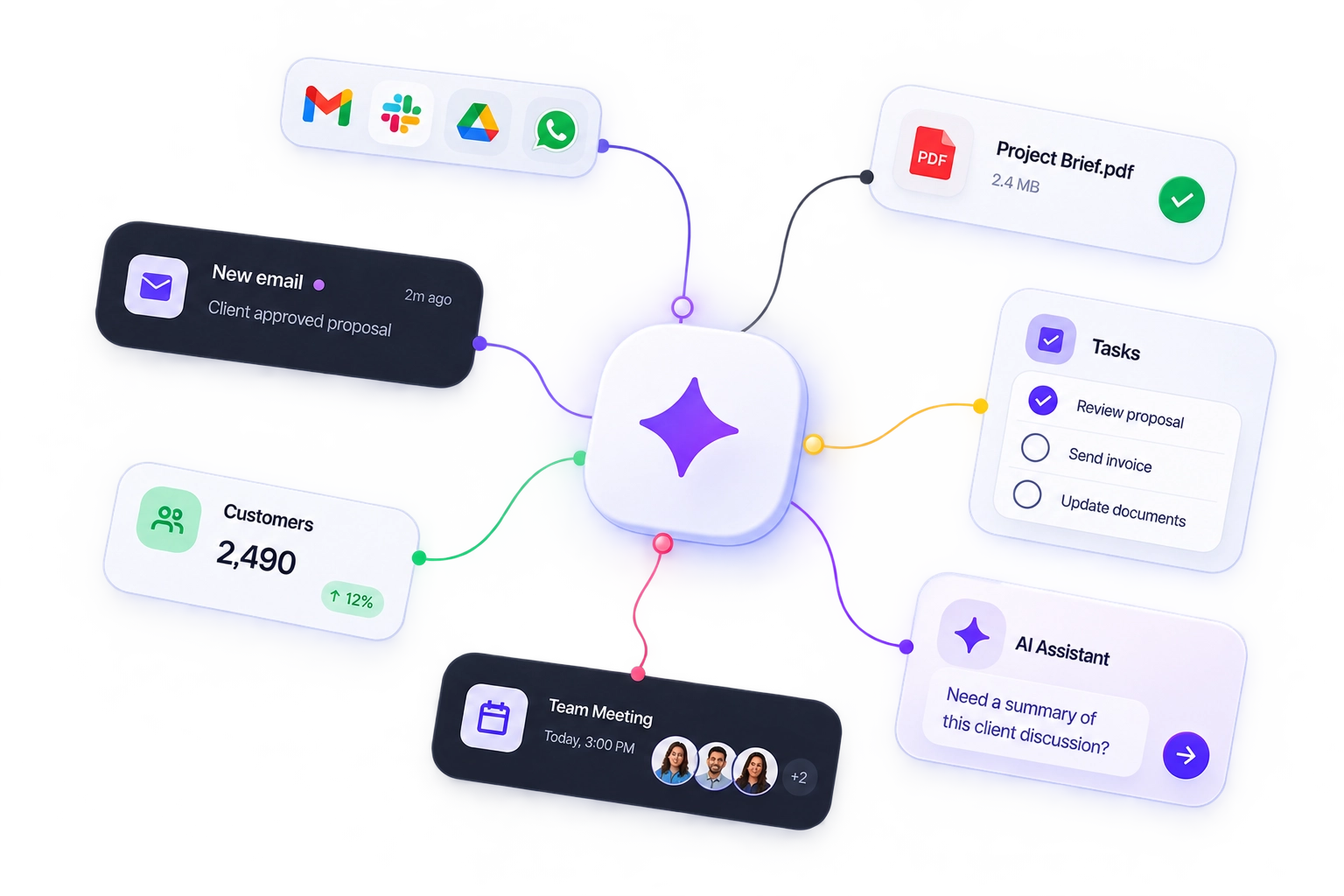
The AI assistant, the CRM, and the invoicing system share the same data, so nothing needs re-entering
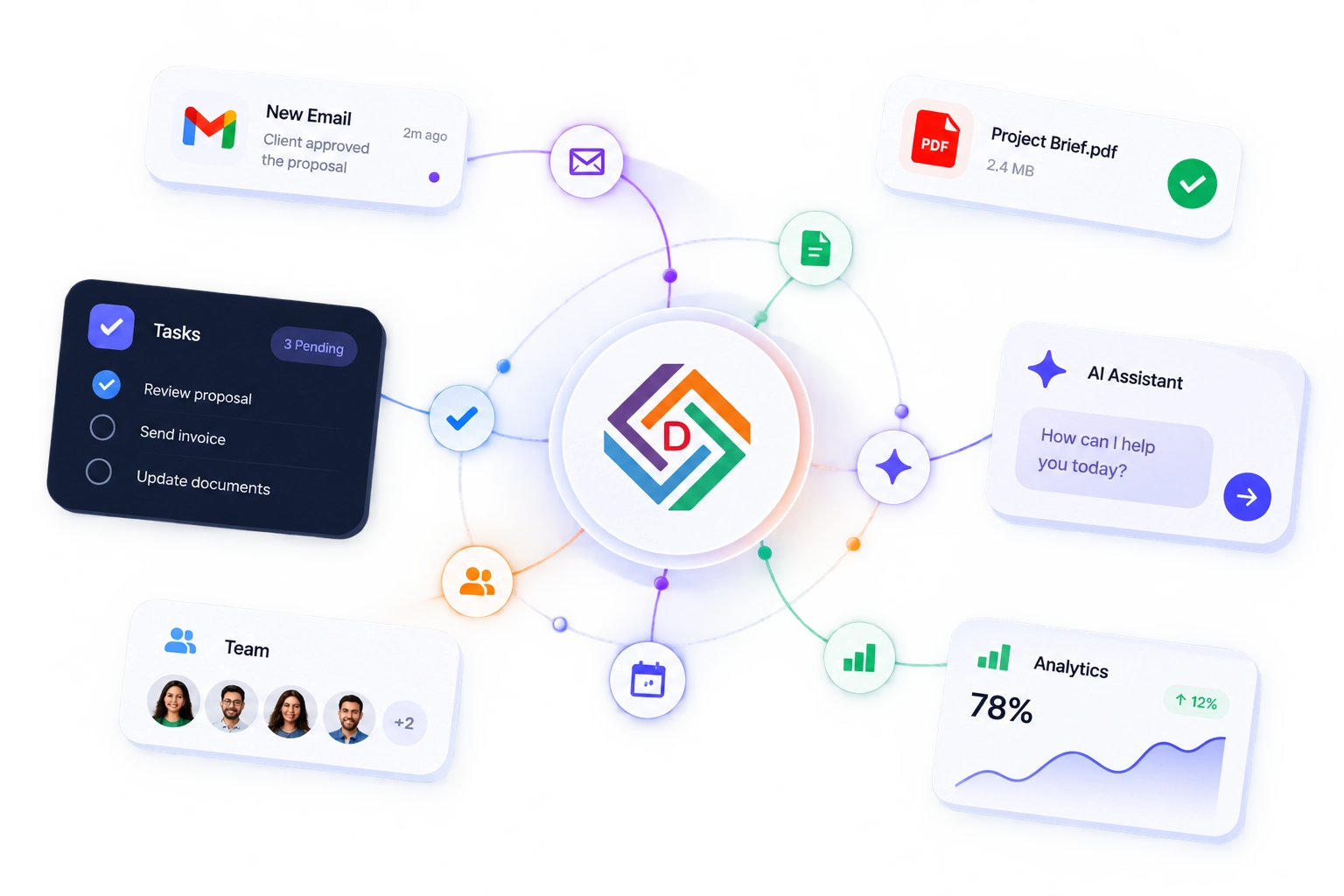
The system keeps evolving after launch

so you're not paying for capability you don't need yet
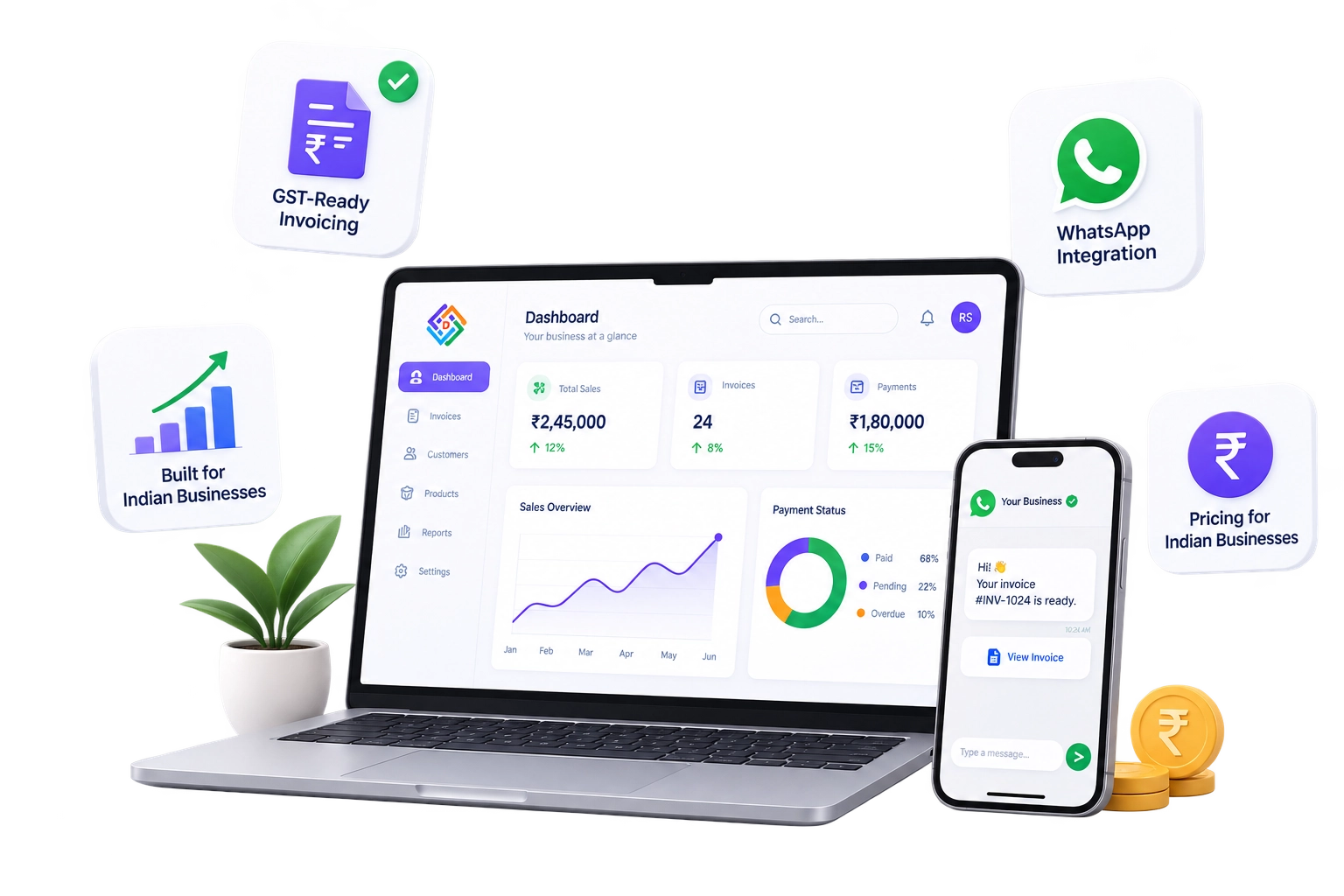
An AI assistant for business only earns its cost if it’s scoped to the right tier. Cost depends on which tier of the system the assistant sits inside, and on the scope of what gets built. Here’s how the tiers break down based on fit, instead of using a set number that doesn’t show your actual setup:
| Tier | Best Fit |
|---|---|
| Business Systems for SMBs | Retail, distribution, hospitality, agencies, education |
| Manufacturing Systems | Fabrication, machining, components businesses |
| AI Platform 360 | Businesses and startups needing AI agents and a connected platform |
Not sure which plan fits your operation? Let’s talk it through.
An AI assistant for business only earns its place if it's where the work already happens, not in a tab someone forgets to open. 59% of Indian SMBs have already made that shift. Dhumi maps your workflow first, builds the AI layer into it, and keeps evolving it monthly for as long as it's earning that place.
Explore our most frequently asked questions to get started.
It's software that uses AI and natural language processing. It automates tasks like lead routing, follow-ups, document handling, and reporting. Ideally, it works within the tools a team already uses, not through a separate app.
It reads and acts on the data already flowing through the business, a WhatsApp enquiry, a quote, an invoice, and automates the next step, like tagging a lead, drafting a follow-up, or flagging a mismatch, instead of requiring someone to manually feed it information.
No. An AI assistant automates rules-based tasks inside software, while a virtual assistant is a person handling judgment calls and exceptions. Dhumi's systems lean on AI for the repetitive layer, while the team keeps ownership of decisions that need context.
It depends on the tier and the scope of what's built. Dhumi's systems span three scoped tiers, from SMB-focused setups to a fully connected AI platform, with cost matched to what's actually included rather than a flat rate. Talk to Dhumi for a scope tailored to your business.
Not reliably. 51% of small business owners describe themselves as "AI explorers" rather than full adopters, largely because AI-only tools struggle with exceptions, judgment calls, and follow-through across systems. A well-built AI assistant for business automates the repetitive layer and leaves ownership of decisions with the team, rather than trying to replace the team outright.
Businesses with high volumes of repetitive, rules-based work, lead intake, invoicing, follow-ups, reporting see the fastest payoff. India leads global SMB AI adoption at 59%, largely driven by exactly these use cases.
Those tools sit alongside your existing software as a separate interface. Dhumi builds the AI assistant directly into the CRM, invoicing, and dashboards it also builds for you, so there's one system and one source of truth, not two. That's the core difference in how Dhumi approaches an AI assistant for business compared to a general-purpose tool.
Support details to capture customers that might be on the fence.